


When you bear a lot of fruit, it brings glory to my Father. It shows that you are my disciples.
John 15:8 NIRV
Conversations and personal reflection have led me to question one of my spiritual assumptions.
When I became a Christian, among the most attractive truths was the opportunity God gives us to change. His promise of repentance and forgiveness was an invitation to lifelong change — or so I thought.
Recently, in my conversations with Christian after Christian, my discovery has been that many are tired of change. Some wonder when they can relax and simply enjoy being a Christian without the burden of change.
As we dug deeper in these conversations, what became apparent was how many people felt persistent anxiety over the expectation to change.
I certainly sympathized; I have felt on many occasions the burdensome weight of my need to change my thinking, character, and sin.
But this anxiety struck me as a departure from my first attraction to Jesus.
The Jesus I got to know when I became a Christian provided me with never-ending forgiveness and the accompanying opportunity to start new every day, to continue the pursuit of my best self.
John 15:8 and many other scriptures brought clarity to the emotional conflict we all feel between the call to grow and our desire to experience satisfaction and happiness.
Read more: Why Am I So High-Strung? 5 Signs Your Anxiety is Owning You
John 15:1-7 teaches us our growth and transformation flows from our relationship with Jesus, which means growth will be a joyful experience when it is a byproduct of walking with God.
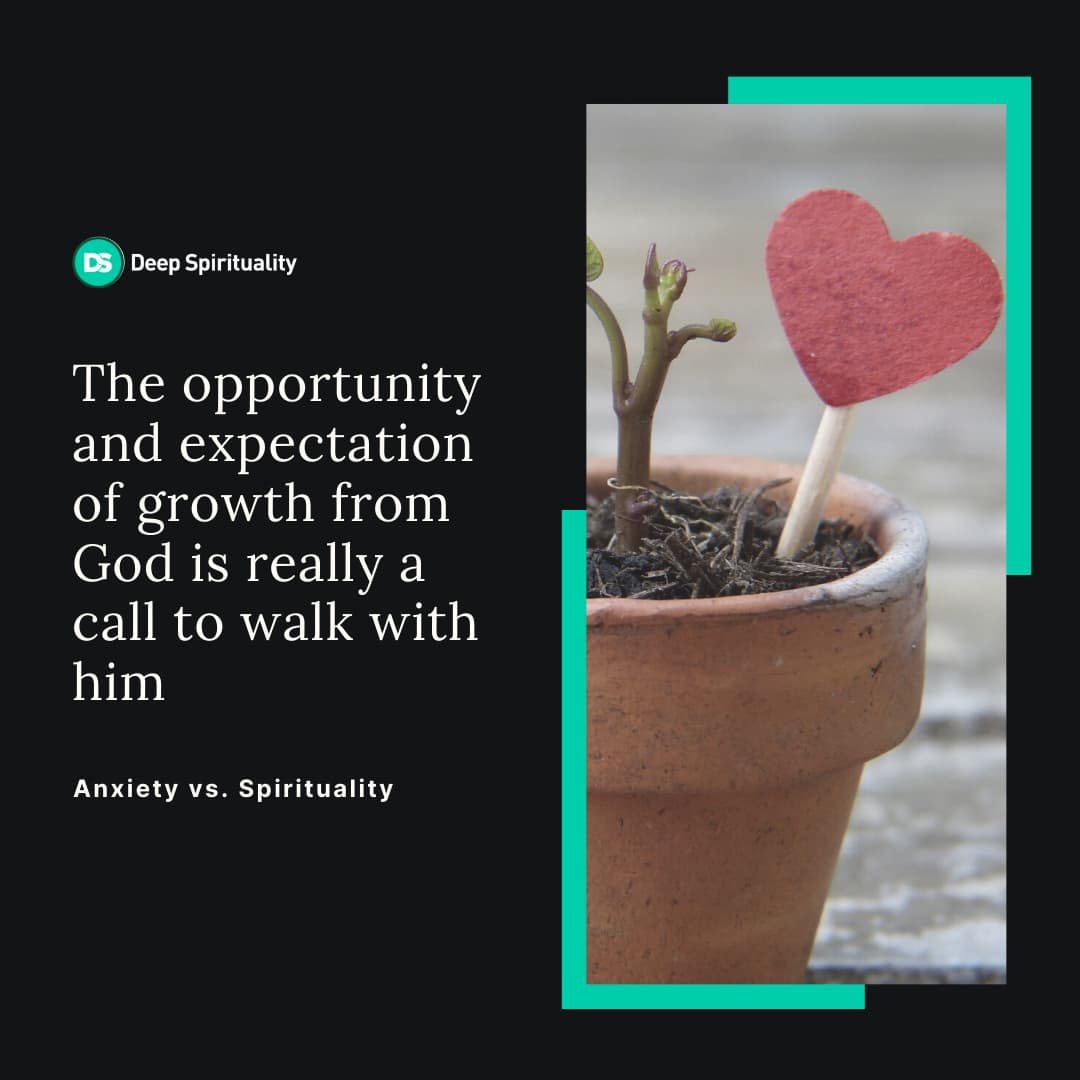
The opportunity and expectation of growth from God is really a call to walk with him, to allow him to transform our lives through the power of the Spirit described in 2 Corinthians 3:17-18 (NIV):
Now the Lord is the Spirit, and where the Spirit of the Lord is, there is freedom. [18] And we all, who with unveiled faces contemplate the Lord’s glory, are being transformed into his image with ever-increasing glory, which comes from the Lord, who is the Spirit.
2 Corinthians 3:17-18 NIV
Why don’t we enjoy this opportunity and expectation of growth from God? The simple answer is that we are applying human rather than spiritual effort, something explained in Galatians 3:3 (NET):
Are you so foolish? Although you began with the Spirit, are you now trying to finish by human effort?
Galatians 3:3 NET
My conflict was completely resolved when I realized that my burden over the opportunity for and expectation of spiritual growth came from pursuing change in a self-reliant way.
This self-reliance is one of the themes of the book of Galatians, and in chapter 4 we see this human effort will steal our joy.
Where then is your sense of happiness now? For I testify about you that if it were possible, you would have pulled out your eyes and given them to me!
Galatians 4:15 NET
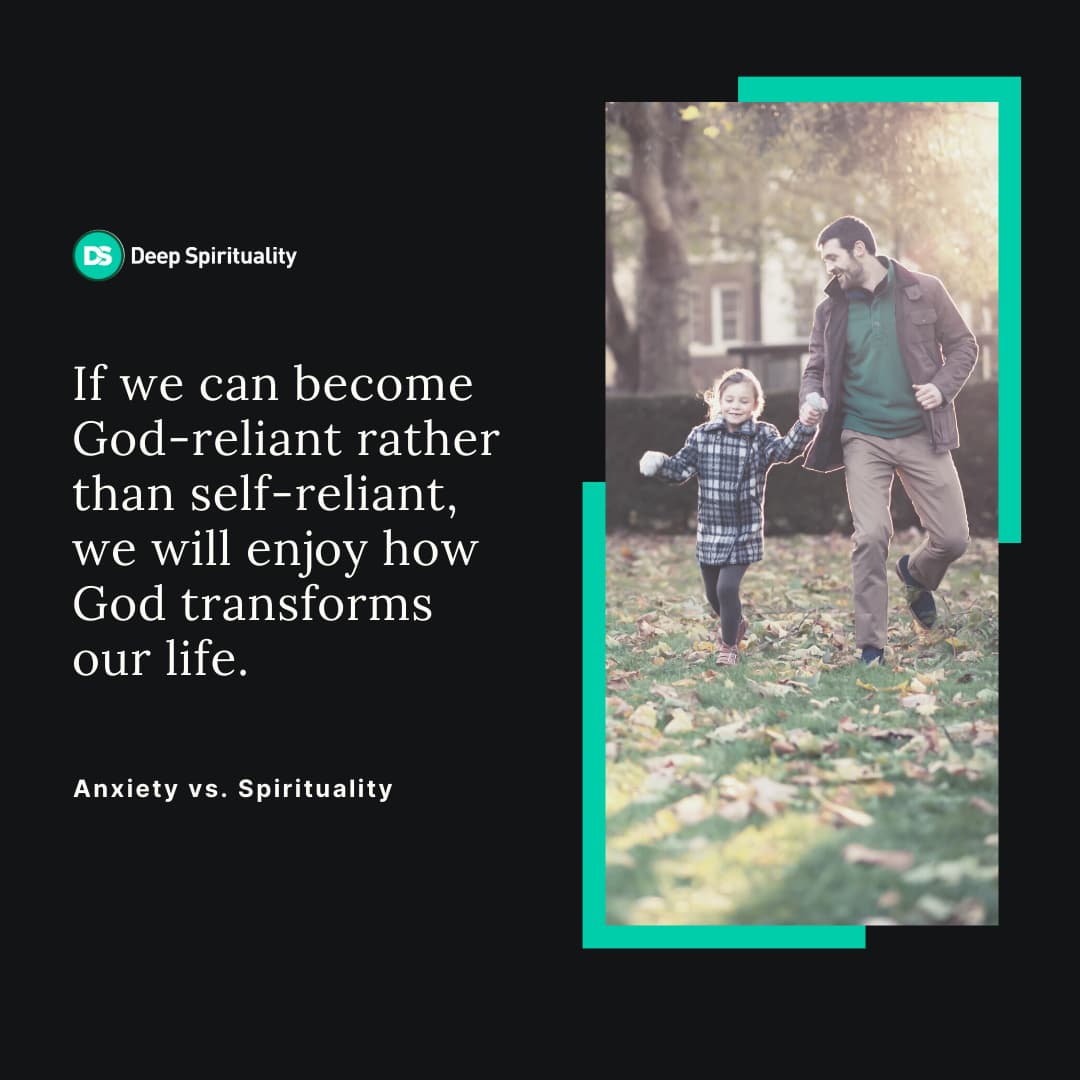
This led me to a simple conclusion. Self-reliance leads to anxiety, and some of this anxiety is over our sense that God wants us to grow. It occurred to me that if we can become God-reliant rather than self-reliant, we will enjoy how God transforms our life.
I decided the best way to become God-reliant would be to look at the scriptures for solutions to our anxiety problem.
The reality I discovered was that it is anxiety that makes us feel burdened in life, whether that burden is from growth or any of a million other things.
Simply put, anxiety is the enemy of spirituality.
We must overcome this anxious experience of life or it will steal the opportunities we have to experience the joy of walking with God. It will also stop us from experiencing the kind of transformative growth that improves the quality of our lives as well as our capacity to be satisfied.
Anxiety is the enemy of spirituality
The American Psychological Association defines anxiety as “an emotion characterized by feelings of tension, worried thoughts and physical changes like increased blood pressure.”
Anxiety is an emotion. Everyone experiences anxiety because it is an emotion, and as human beings we all have emotions.
Across thirty years of working in the for-profit, non-profit, sports, and religious worlds, one constant I have found is the large number of people with whom I have worked, including myself, who are either unaware of or unwilling to admit their anxiety.
Read more: How to Stop Worrying and Start Trusting God: 15 Helpful Tips
Anxiety is an emotion, but many of us treat it like it is a disorder. We often conceal our anxiety because we are aware of the prejudice experienced by those with mental health challenges.
But because anxiety is an emotion, those “feelings of tension, worried thoughts, and physical changes like increased blood pressure” will happen regardless of whether or not we choose to admit how anxious we are.
Rather than fall prey to the unjustified and irrational prejudice against those with mental health challenges, we should accept, admit, and share our anxiety. We should do this in hopes that when each one of us comes to grip with our anxiety, we can help not only ourselves, but develop the empathy necessary to respect those who experience this emotion at heightened levels.
Anxiety is an emotion. Everyone experiences anxiety because it is an emotion, and as human beings we all have emotions.
Psalm 46 is poetry and song meant to share the intimacy of this writer’s walk with God. He describes God as an unwavering source of confidence even in the stormiest moments of life:
God is our shelter and our strength. When troubles seem near, God is nearer, and He’s ready to help. So why run and hide? No fear, no pacing, no biting fingernails. When the earth spins out of control, we are sure and fearless. When mountains crumble and the waters run wild, we are sure and fearless. [3] Even in heavy winds and huge waves, or as mountains shake, we are sure and fearless.
Psalm 46:1-3 Voice
Reading on, we learn about the spiritual confidence of the person who chooses to focus on God:
There is a river whose streams make glad the city of God, the holy place where the Most High dwells. God is within her, she will not fall; God will help her at break of day.
Psalm 46:4-5 NIV
This writer’s proclamation is meant to touch and move hearts to see God as a wonderful relationship. God is the possessor of the sovereign power necessary to help us conquer this life, not a mere author of a set of life rules.
You know the Eternal, the Commander of heavenly armies, surrounds us and protects us; the True God of Jacob is our shelter, close to His heart. [pause] [8] Come, gaze, fix your eyes on what the Eternal can do. Amazing, He has worked desolation here on this battlefield, earth. [9] God can stop wars anywhere in the world. He can make scrap of all weapons: snap bows, shatter spears, and burn shields. [10] “Be still, be calm, see, and understand I am the True God. I am honored among all the nations. I am honored over all the earth.”
Psalm 46:7-10 Voice
After his testimony about the breathtaking power of God, we discover that this author’s poetic message is for us to surrender our anxiety, to be still, be calm, and understand that God is God. Not to strive to get more or finish first in our effort to impress people, but instead choose to think and live a spiritual life.
We do this by keeping our focus on God and believing in his love. As we trust in the sovereignty of God, we live peaceful, productive, and satisfying lives.
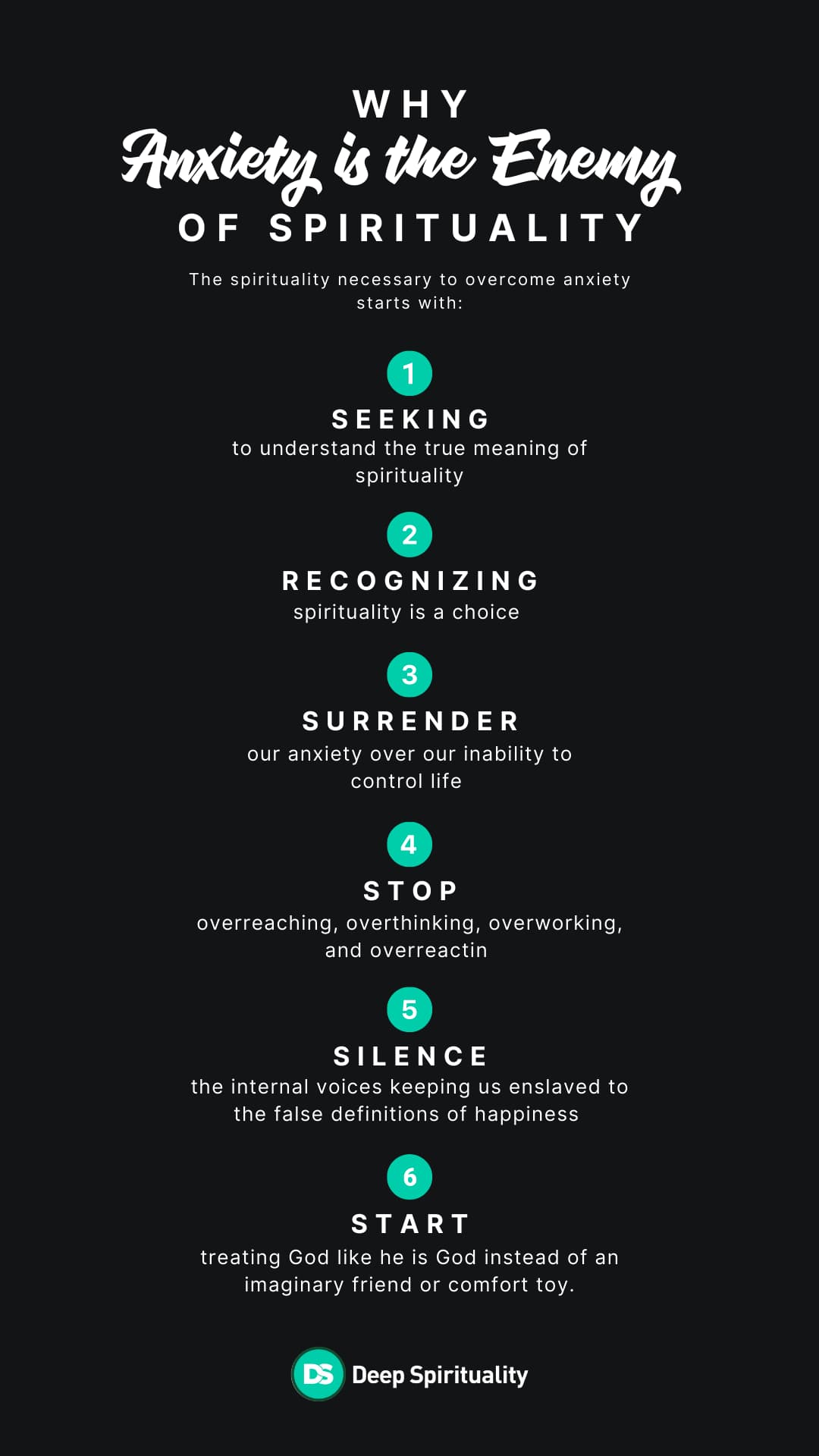
Let’s look at six things we can do to develop the spirituality necessary to overcome anxiety:
- Seek to understand the true meaning of spirituality.
- Recognize that spirituality is a choice.
- Surrender our anxiety over our inability to control life.
- Decide to stop overreaching, overthinking, overworking, and overreacting.
- Silence the internal voices keeping us enslaved to false definitions of happiness.
- Start to treat God like he is God instead of an imaginary friend or comfort toy.
Seek to understand the true meaning of spirituality.
“Do not store up for yourselves treasures on earth, where moths and vermin destroy, and where thieves break in and steal. [20] But store up for yourselves treasures in heaven, where moths and vermin do not destroy, and where thieves do not break in and steal. [21] For where your treasure is, there your heart will be also.
Matthew 6:19-21 NIV
Defeating anxiety begins with adopting a spiritual rather than material outlook on life—living a life where we choose to value the unseen over the seen.
Anxiety is the enemy of spirituality because our anxieties almost always focus us on the material:
Still others, like seed sown among thorns, hear the word; [19] but the worries of this life, the deceitfulness of wealth and the desires for other things come in and choke the word, making it unfruitful.
Mark 4:18-19 NIV
This choice to live a spiritual life focused on the unseen is described in 2 Corinthians 4:18 NIV which says, “So we fix our eyes not on what is seen, but on what is unseen, since what is seen is temporary, but what is unseen is eternal.”
Recognize that spirituality is a choice.
“No one can serve two masters. Either you will hate the one and love the other, or you will be devoted to the one and despise the other. You cannot serve both God and money.”
Matthew 6:24 NIV
The first choice of a person who values the unseen and lives a spiritual life is to choose the true God instead of the god of money.
This is a choice about the source of our confidence.
Do we make God our source of confidence, relying on him to guide our lives toward the promised beautiful life described in Romans 8:28 (Voice)? Or do we make money our source of confidence, relying on ourselves to obtain the power, position, prestige, and possessions we think will keep us safe and secure?
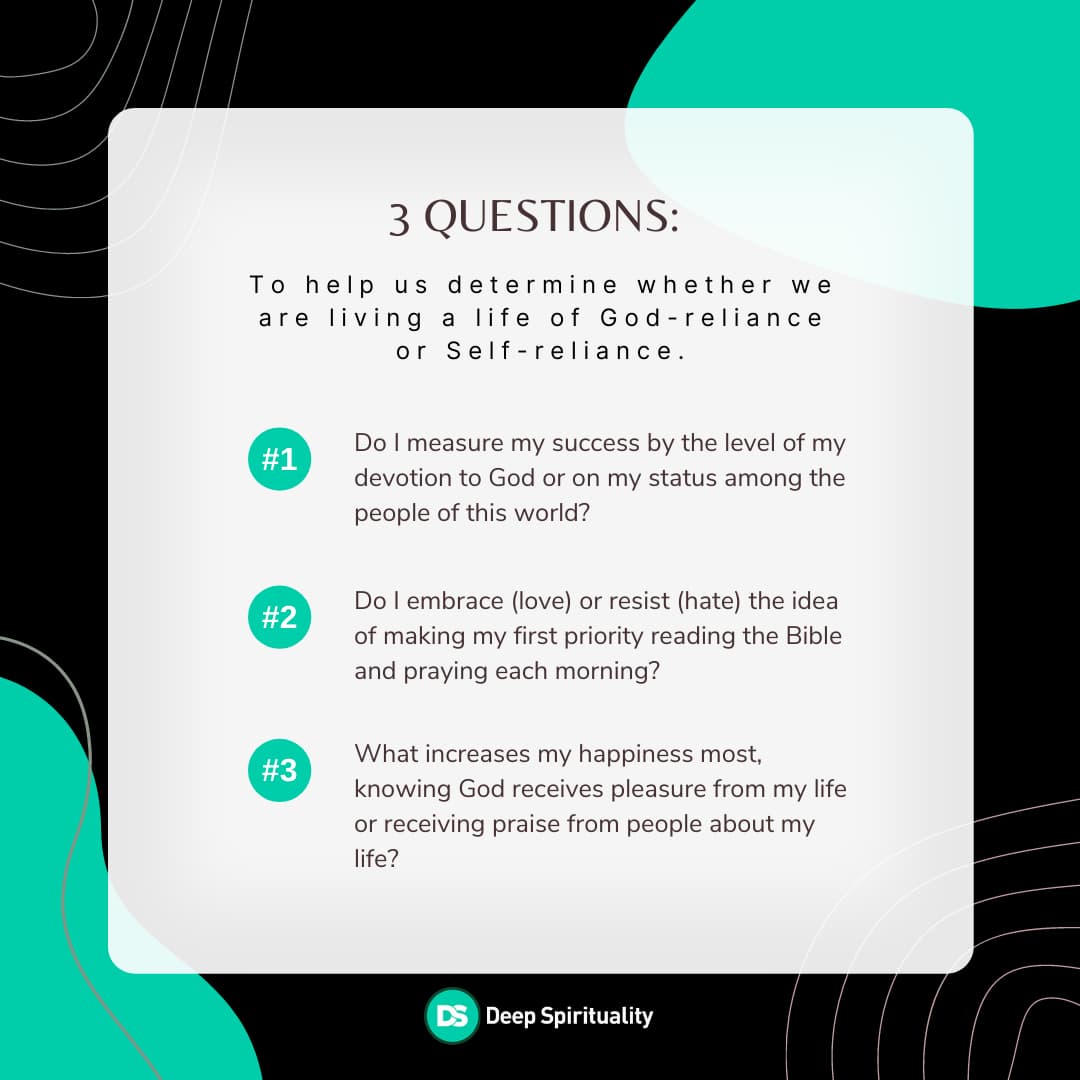
There are three questions we can ask ourselves to help us determine whether we are living a life of God-reliance or self-reliance:
- Do I measure my success by the level of my devotion to God or on my status among the people of this world?
- Do I embrace (love) or resist (hate) the idea of making my first priority reading the Bible and praying each morning?
- What increases my happiness most—knowing God receives pleasure from my life or receiving praise from people about my life?
Surrender your anxiety over your inability to control life.
“Therefore I tell you, do not worry about your life, what you will eat or drink; or about your body, what you will wear. Is not life more than food, and the body more than clothes?
Matthew 6:25 NIV
Spirituality is about our ability to let go — to give up trying to control life.
Jesus speaks in Matthew 6:25 about never worrying about our lives, which means acknowledging we have no control. Rather than becoming overwhelmed by this truth, we can recognize the opportunity God is offering us through faith.
Surrendering our anxiety gives us the chance to have a deeper, richer, and more meaningful life—one that exceeds the anxious striving of chasing power, position, prestige, and possessions.
Stop overreaching, overthinking, overworking, and overreacting.
Look at the birds of the air; they do not sow or reap or store away in barns, and yet your heavenly Father feeds them. Are you not much more valuable than they? [27] Can any one of you by worrying add a single hour to your life?
Matthew 6:26-27 NIV
Jesus calls on us to observe nature, asking the question how many burned-out birds do you see? Burnout is about overreaching, overthinking, overworking, and overreacting in the delusional pursuit to control a world we cannot control.
Anxious people overreach, overthink, overwork, and overreact until they burn out. Spiritual people live passionately, purposefully, powerfully, and patiently in their walk with God, knowing he is the only one who can bring everything in life together in a beautiful way.
Silence the internal voices keeping you enslaved to false definitions of happiness.
“And why do you worry about clothes? See how the flowers of the field grow. They do not labor or spin. [29] Yet I tell you that not even Solomon in all his splendor was dressed like one of these. [30] If that is how God clothes the grass of the field, which is here today and tomorrow is thrown into the fire, will he not much more clothe you—you of little faith? [31] So do not worry, saying, ‘What shall we eat?’ or ‘What shall we drink?’ or ‘What shall we wear?’ [32] For the pagans run after all these things, and your heavenly Father knows that you need them.
Matthew 6:28-32 NIV
The internal voices at work in our lives are all about motives. Motives are the answers to all of our “why” questions:
Why are we so intent on getting that, being this, knowing him, dating her, going there, leaving here, receiving more, giving less, rising higher, or getting out? And perhaps the biggest why of all: why are we often hesitant to admit the motives behind what we’re doing to other people?
Silencing the internal voices keeping us enslaved to the false definitions of happiness means practicing what the Scriptures call “purifying.”
Matthew 5:8 says, “Blessed are the pure in heart, for they will see God.” This means one of the most important aspects of our relationship with God is making sure our motives are pure, that what motivates us is a spiritual rather than material pursuit.
Start treating God like he is God instead of an imaginary friend or comfort toy.
But seek first his kingdom and his righteousness, and all these things will be given to you as well. [34] Therefore do not worry about tomorrow, for tomorrow will worry about itself. Each day has enough trouble of its own.
Matthew 6:33-34 NIV
In my view, seeking God in the way Matthew 6:33 describes is when we start treating God like he is God instead of an imaginary friend or comfort toy.
The moment we start treating God like he is God is the moment when we acknowledge that Jesus’s cross and resurrection are so real and important that they alter our life values from the material to the spiritual.
We do this knowing it will greatly reduce if not eliminate the anxiety which is the enemy of the powerful spirituality Jesus longs to manifest in our lives to the glory of God.