
Settle in
Take a deep breath. Turn off notifications on your phone. Ask God to help you understand the impact of your words and speak in a way that honors him.
Thought starter
“What people say with their mouths comes from what is in their hearts.”
Matthew 12:34 ERV
Our words are a mirror of our hearts. They reflect what’s truly inside—either honoring God or revealing distance from him.
Here’s what we’ll learn in this Quick Quiet Time:
- We distance ourselves from God when we curse, use profanity, or say his name in a disrespectful way.
- Our words aren’t just harmless expressions; they reveal what’s in our hearts.
- Our words have the power to lift others up or tear them down. The choice is ours.

The look that silences the tongue
Peter, one of Jesus’s best friends, was under pressure, and he denied Jesus—not just with words, but with strong language and curses.
But he began to invoke a curse on himself and to swear, “I do not know this man of whom you speak.”
Mark 14:71 ESV
And the Lord turned and looked at Peter. And Peter remembered… And he went out and wept bitterly.
Luke 22:61–62 ESV
Truth bomb:
Peter didn’t just deny Jesus—he swore to make it sound convincing. He wanted to fit in and avoid trouble.
- We do the same when we use curse words or say “Oh my God” or “Jesus Christ” without thinking.
- Jesus looked at Peter, but not with rage. He looked at him with love and sadness. That look broke Peter’s heart.
- Let’s imagine Jesus looking at us when we’re swearing or saying stuff that hurts—not to shame us, but to call us higher.
Reflect:
- Do I use curse words to sound tough, funny, or to fit in?
- Do I speak differently around certain people to fit in?

The weight of God’s name
You shall not take the name of the LORD your God in vain, for the LORD will not hold him guiltless who takes his name in vain.
Exodus 20:7 ESV
They are your enemies. They misuse your name. They misuse it for their own evil purposes.
Psalm 139:20 NIrV
What it means:
The word vain means “empty” or “useless.” Using God’s name in vain means using his name without meaning or respect.
- Saying “OMG” or “Jesus Christ” when you’re not talking to him is disrespectful.
- And saying “God d—” in anger isn’t just bad language. It’s dishonoring God, who gave us his name to call on in love, not in rage.
Reflect
- Do I say God’s name without thinking, like it’s just another word?
- Am I in the habit of using his name in ways that don’t honor him?

The impact of careless words
“I tell you, on the day of judgment people will give account for every careless word they speak …”
Matthew 12:36 ESV
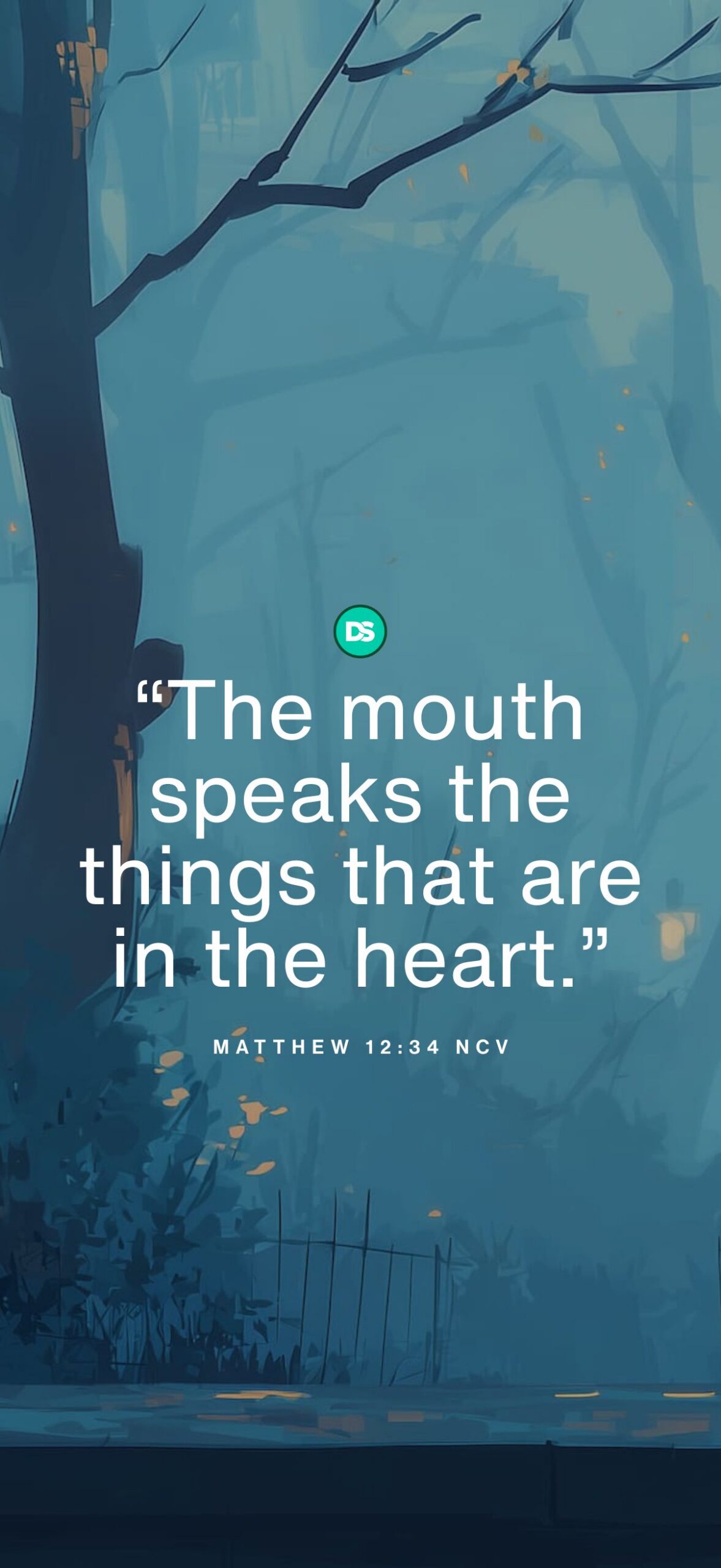
“The mouth speaks the things that are in the heart.”
Matthew 12:34 NCV
Do not let any unwholesome talk come out of your mouths, but only what is helpful for building others up according to their needs, that it may benefit those who listen.
Ephesians 4:29 NIV
Truth bomb:
We worry about “big” lies, but Jesus warns against throwaway words, like sarcasm, flippant jokes, casual profanity.
- Our words matter because they are like receipts. They show what’s really going on in our hearts.
- When we use profanity, we’re not just being edgy—we’re revealing what’s bubbling in our hearts. And if our hearts are full of frustration, bitterness, or pride, it’s going to come out in our speech.
- Curse words aren’t just “harmless expressions” or “just how people talk.” They’re often loaded with anger, disrespect, or vulgarity. Even if culture normalizes them, God calls us to a higher standard!
Write it down:
- If a transcript of every word I said today was read in heaven, would I be embarrassed?
- Do my words make people feel seen, safe, and built up—or do they come across as mean, disrespectful, or unkind?

God’s expectations of our speech
In the same way, the tongue is a small thing that makes grand speeches. But a tiny spark can set a great forest on fire …[9] Sometimes it praises our Lord and Father, and sometimes it curses those who have been made in the image of God. [10] And so blessing and cursing come pouring out of the same mouth. Surely, my brothers and sisters, this is not right!
James 3:5, 9-10 NLT
Truth bomb:
We can’t worship with our mouth on Sunday and curse with it on Monday.
- One spark can start a forest fire, and one word can destroy a relationship.
- A mouth that says “Amen” shouldn’t also drop F-bombs or use “OMG” like it’s nothing. That’s not just bad language—it’s a contradiction of our calling.
- Let’s not excuse it—let’s let God cleanse it.
Bonus reflection questions:
Use the questions to reflect on your words before we move on to the next section of our Quick Quiet Time:
- What emotions usually trigger my profanity—anger, stress, fear?
- What would it look like to surrender even my vocabulary to God?
- Are my jokes building people up or tearing them down?
- What words come out first when I’m frustrated—and what do they reveal?
- Do I use sarcasm or passive aggression to hide what I really feel?
- Would I be proud if someone replayed everything I said today?
- Am I more quick to speak or quick to listen?
- Would I want someone to imitate the way I talk?
- Do I use my voice to defend others—or stay silent when it’s easier?

The power of praise
The tongue has the power of life and death…
Proverbs 18:21 NIV
The flip side:
If cursing and sarcasm tear down, then praise and encouragement build up.
- Every time we choose praise over profanity, we’re inviting God’s presence into our lives.
Practice:
- Instead of “OMG,” say “Thank you, God.”
- Instead of venting, say “God, help me.”
- Instead of gossip, give a compliment.
- Instead of tearing down, speak life.
Reflect:
- Do I use my words to lift others up or tear them down?
- Who needs to hear something life-giving from me today?
Try it:
Pick one “filler word” you use when you’re frustrated. For the next 24 hours, every time you’re tempted to say it, say “God is good” instead.
That discomfort you feel? That’s the Holy Spirit reminding you—you’re set apart, and your words matter to God.
Prayer response:
“God, I apologize for being insensitive and careless with my words. Fill my heart with good thoughts rather than harmful ones. Let my mouth be a place where you are honored and respected. Let my words lift people up rather than tear them down. Amen.”

The Seven-day challenge
Set a guard, O LORD, over my mouth; keep watch over the door of my lips!
Psalm 141:3 ESV
Practice this for the next seven days to reset your speech!
The filter:
Before speaking, pause for a couple of seconds and ask yourself: “Is this full or hollow?” Does it carry weight, truth, and depth—or is it empty, careless, or harmful?
The fast:
Commit to zero tolerance for this language:
- “OMG”
- Using God’s name casually or irreverently
- Swearing or crude language
The flip:
When tempted to misuse God’s name or speak carelessly, flip your words into a real prayer.
- Try “God, help me…” instead of “Oh my God!”
- Choose words that honor him and reflect love, truth, and self-control.
Bring the inspiration with you
Save this phone wallpaper to remind you to speak helpful words instead of harmful ones today!