
Settle in
Take a deep breath. Turn off notifications on your phone. Ask God to help you believe that you can be part of the “comeback crew” for someone who needs it.
Thought starter
A comeback crew is a team that knows what it’s like to fall and get back up. That’s because falling isn’t failure when God is involved. Our comebacks are a beautiful part of our story; God will work through them to inspire other people to have comebacks too.
Here’s what we’ll learn in this Quick Quiet Time:
- Our prayers are other people’s life-preservers.
- Our comebacks aren’t just for us; they equip us to help others who have fallen.
- Our forgiveness inspires the fallen to rise again.

Our prayers are life preservers.
“When you pray, he will hear you. And you will be able to do all that you promised him… [29] When people are brought down and you ask God to help them, he will rescue those who have been humbled. [30] Even those who are guilty will be forgiven. They will be saved because you did what was right.”
Job 22:27, 29–30 ERV
Truth bomb:
Our prayers and our lives can make a real difference—not just for us, but for others too.
- “Intercession” is when we pray for someone else—asking God to help, heal, or forgive them.
- While these words were spoken by Job’s friend Eliphaz—who had some opinions that were later corrected by God—this verse still reflects a timeless truth about the power of intercession (praying on someone else’s behalf).
- When others are struggling or feel defeated, and we pray for them, God will help and lift them up.
- Even people who’ve done wrong can be forgiven and saved because of our faithful and righteous actions.
Nerd alert:
Job 22:29 uses the Hebrew word yasha (“to save”)—the root of Yeshua, the name of Jesus.
This reveals something profound: one person’s righteousness and intercession can become the rescue line for others.
The righteous cry out, and the LORD hears them; he delivers them from all their troubles.
Psalm 34:17 NIV
“I searched for a man among them who would build up the wall and stand in the gap before Me for [the sake of] the land, that I would not destroy it, but I found no one [not even one].”
Ezekiel 22:30 AMP
Truth bomb:
God listens and responds when the righteous speak. Prayer is not passive. It’s powerful.
- Even the guilty can receive forgiveness when someone righteous stands in the gap between them and God and prays for them.

Everyone needs a comeback crew.
Read:
As long as Moses held up his hands, the Israelites were winning, but whenever he lowered his hands, the Amalekites were winning. When Moses’ hands grew tired, they took a stone and put it under him and he sat on it. Aaron and Hur held his hands up—one on one side, one on the other—so that his hands remained steady till sunset. So Joshua overcame the Amalekite army with the sword.
Exodus 17:11–13 NIV
Where there is no [wise, intelligent] guidance, the people fall [and go off course like a ship without a helm], But in the abundance of [wise and godly] counselors there is victory.
Proverbs 11:14 AMP
Truth bomb:
Everyone falls. But not everyone stays down. The difference? Friends who show up and hold us up.
- The battle in Exodus 17 is a vivid picture of intercession and perseverance.
- Moses’s raised hands symbolized prayer and dependence on God.
- Even Moses got tired; he couldn’t keep fighting alone. Aaron and Hur stood with him, holding him up until the victory was won.
- Moses’ intercession brought victory, but only because others stood with him.
Reflect:
- Who in your life needs you to “stand in the gap” today? Who can you lift up, even when they’re weary?

Our comebacks equip us to lead rescue missions.
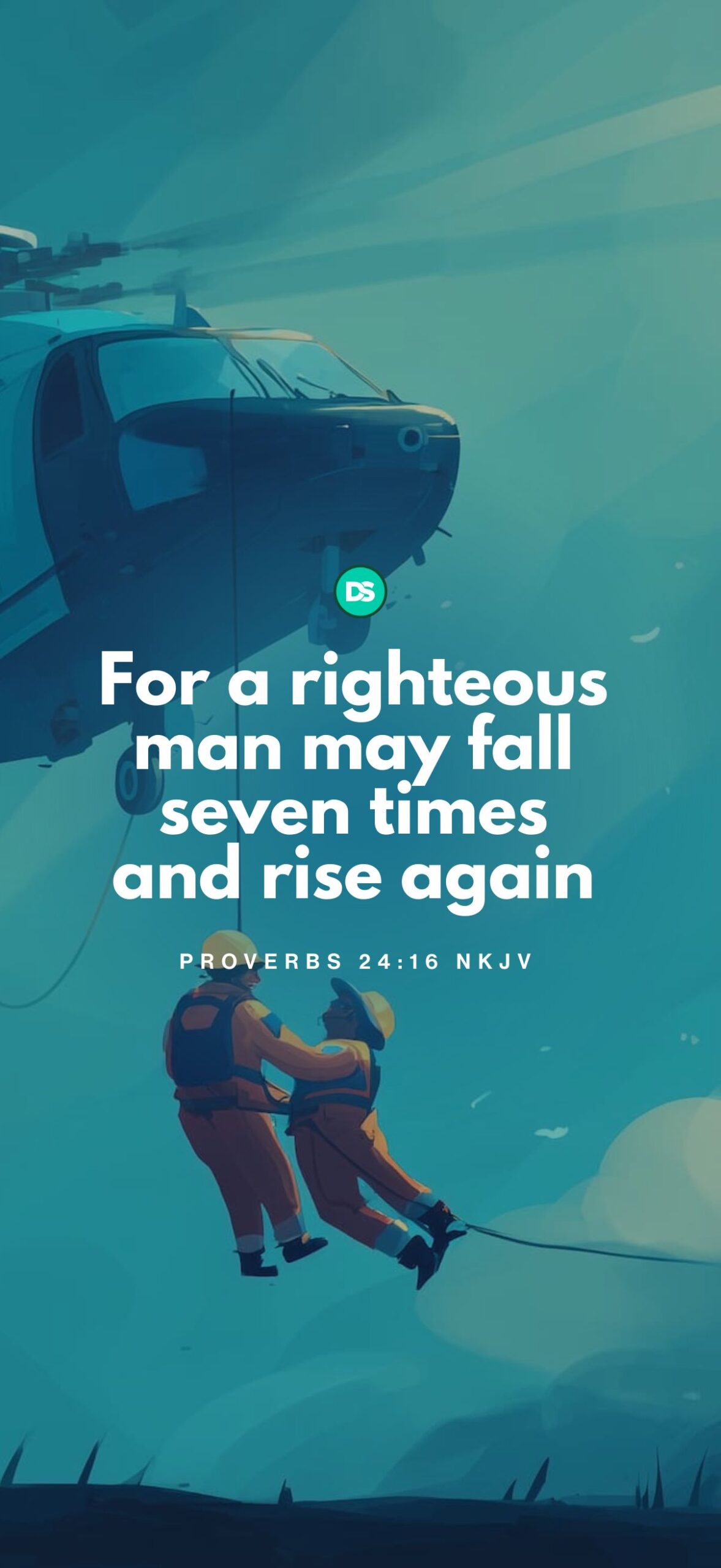
For a righteous man may fall seven times and rise again, but the wicked shall fall by calamity.
Proverbs 24:16 NKJV
though he may stumble, he will not fall, for the LORD upholds him with his hand.
Psalm 37:24 NIV
Lightbulb moment:
Broken doesn’t mean finished. In God’s hands, broken pieces become building blocks.
- Life has a way of breaking us and making us fall. But God does the repairs.
- It might be a breakup that leaves us shattered, a job loss that shakes our confidence, a mistake that fills us with guilt, or a season of sin that makes us wonder if God still wants us.
- But here’s the truth: God is the God of second chances—and third, and fourth, and hundredth chances.
Our brokenness can be beautiful.
- The traditional Japanese practice of kintsugi means repairing broken pottery by mending the areas of fracture with lacquer dusted or mixed with powdered gold, silver, or platinum.
- The repair lines are not hidden; instead, the golden cracks are highlighted, becoming beautiful, visible features of the piece.
- The object is considered more beautiful and valuable because it was broken and repaired
Truth bomb:
Our worst moment doesn’t cancel our purpose. In fact, it might just be the beginning of our comeback.
- When we cry out to God from the middle of our mess, he doesn’t turn away; he leans in. He hears. He heals. He restores.
- And when we’ve been through the fire and come out on the other side, we don’t just carry scars—we carry stories. These stories help others believe they, too, can rise again.
Rising again in the movies
Rise and rise again until lambs become lions.
Robin Hood (2010)
In Christ, we rise—and rise again—until we become someone who lifts others, roars with courage, and leads the way out of the valley.

Metaphor moments
Let’s take a look at a few metaphors to help us understand what it looks like to be on a comeback crew:
The prayer rope
Our prayers are like a rope thrown down to someone stuck at the bottom of a cliff. We might not always see them, but our prayers reach them.
- If we’ve been at the bottom of that same cliff before, we know just what to say to help them believe they can make it back up, too.
Every time we pray, it’s like pulling the rope up—slow and steady, but strong.
- Our prayers are the rope. Our faith, our choices, and our story keep the rope anchored.
- When we make it through hard times, we become someone who can help others climb out.
The spiritual rescue signal
People who hike in remote areas often wear special beacons that they can trigger when they’re trapped. The beacon sends out a signal to mountain rescue teams.
- When we pray for someone who’s hurting, it’s like we’re picking up that signal and responding. We’re opening the door for heaven to send help exactly where it’s needed.
Reflect:
- Who’s in your “comeback crew”? Who’s helped lift you up?
- Who might need your rope today—your prayer, your encouragement, your faith?

We can’t lift people up when we’re looking down on them.
Before continuing, read this passage about what happens when we look down on others and when we don’t. Circle, underline, or highlight any words that stand out to you: Luke 18:9-14.
To some who were confident of their own righteousness and looked down on everyone else, Jesus told this parable…
Luke 18:9 NIV
Truth bomb:
We can’t help people up if we look down on them when they fall.
- In Luke 18:9-14, Jesus tells a story about mercy, humility, and not looking down on others.
- In the story, a Pharisee prays, boasting about his fasting and tithing, and thanks God that he is not like other sinners.
- A tax collector, standing at a distance, won’t even lift his eyes to heaven. He simply prays, “God, have mercy on me, a sinner.”
- Jesus concludes: “I tell you that this man, rather than the other, went home justified before God.”
- When we’re aware of how much mercy we have received from God, we will extend that same mercy to others when they need it.
Reflect:
- Are you living in a way that makes you a safe place for the broken?
- Have you ever been tempted to look down on someone else or gossip about them when they’re being open about their life and sin?
- How much do you share your own struggles when someone is struggling?

Forgiveness inspires the fallen.
Jesus said, “Father, forgive them, for they do not know what they are doing.”
Luke 23:34 NIV
Truth bomb:
Jesus pleaded for mercy for the fallen, not judgment.
- Jesus intercedes and prays for the fallen while dying on the cross.
- “They know not what they do” doesn’t mean they were innocent, but that they didn’t fully grasp the spiritual weight of their actions.
What this means:
- This is a radical last act of mercy. Jesus prays for the very people crucifying him—Roman soldiers, mocking crowds, religious leaders—asking God to forgive them even as they commit the ultimate injustice.
- It reveals Jesus’s role as mediator. Even in his final breath, he stood in the “gap” for us.
- It sets the standard for divine forgiveness—and calls us to follow it.
- Forgiveness is not about excusing wrongs but about releasing others from condemnation, just as we’ve been released.
The “echo of mercy” metaphor:
- When Jesus said, “Father, forgive them,” on the cross, those words didn’t stop there. They still echo today.
- When we choose to forgive someone, we’re adding our voice to that echo.
- We’re letting mercy keep moving into someone else’s life, into their story.
- When someone is carrying guilt that feels too heavy, God’s mercy flows to them through us.
The voice of mercy in Scripture:
- Stephen, the first Christian martyr, echoes Jesus in Acts 7:60: “Lord, do not hold this sin against them.”
- In Matthew 5:44, Jesus teaches us this: “Love your enemies and pray for those who persecute you.”
- Isaiah 53:12 is a prophecy of the Messiah, saying, “He bore the sin of many, and made intercession for the transgressors.”
Reflect:
- When have you been called to forgive someone who hurt you deeply, and how does Jesus’s example on the cross challenge or inspire your response?
- Who in your life might need forgiveness, even if they “don’t know what they’re doing”?
- What would it look like to pray for them instead of resenting them?

Final thoughts
The power of a comeback crew
We are called to stand in the gap, modeling Jesus’ mercy, because we know what falling feels like.
We’re part of the comeback crew, and we can’t underestimate the power of our tools:
- Our prayers are the rope. Someone out there is waiting for our prayers to pull them up.
- Our mercy is the signal. Let’s forgive boldly and keep the echo of Jesus’ mercy alive.
- Our lives are the rescue mission. When we know what it’s like to fall, we’re equipped to help others rise.
Bring the inspiration with you
Save this phone wallpaper to remind you of the comeback you can have today!