
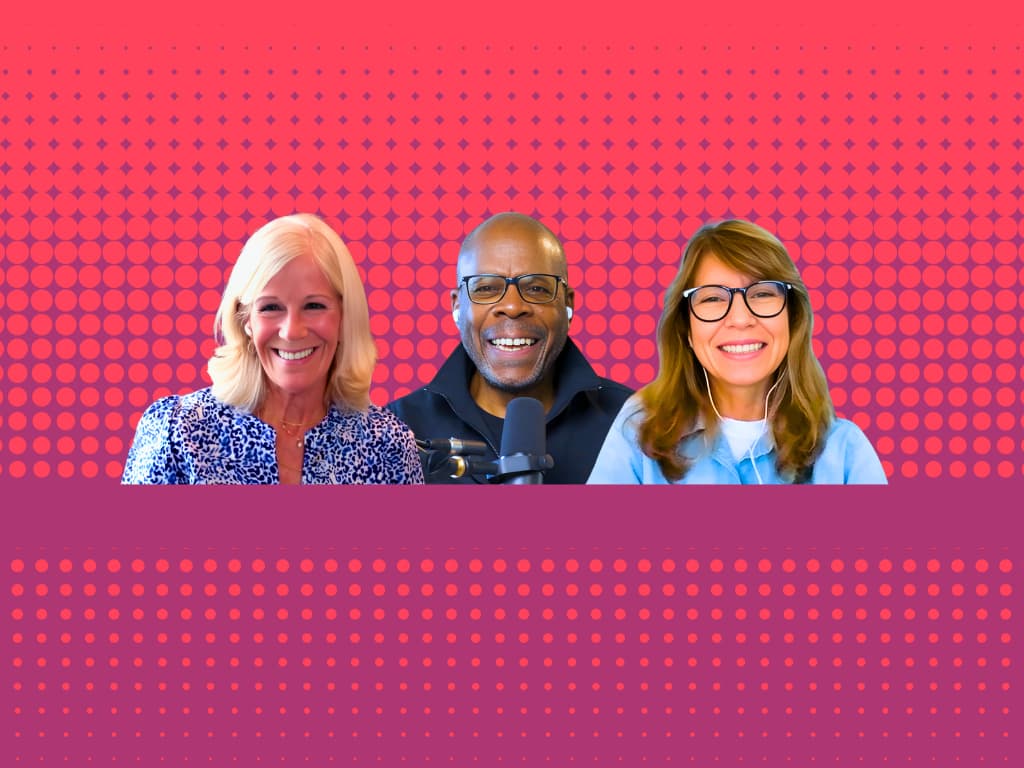

Gen Z is hurting—and they know it. In this candid conversation, therapist Liz Llamas and nurse leader MaryAnn McGaret join host Russ Ewell to explore why so many young adults feel exhausted, anxious, and alone—despite being more focused on wellness than any generation before.
We cut through the noise of viral self-care trends and social media “The Great Lock-In” challenges to reveal what’s really missing: authentic connection, true meaning, and the courage to find your own path. Discover how discipline, community, and finding your unique motivation can bring the breakthrough you need—no matter where you’re starting from.
Hit play for practical advice—and a reminder that you’re not alone in the search for a life that finally feels whole.
► SUBSCRIBE TO THE PODCAST: https://youtube.com/deepspirituality/?sub_confirmation=1
Scriptures
The purposes of a person’s heart are deep waters, but one who has insight draws them out.
Proverbs 20:5 NIV
Transcription
Russ Ewell:
Welcome to the DSP Spirituality Podcast. I’m excited to talk about a topic resonating across every generation—wellness. This issue is everywhere, both online and offline. Wellness is especially important for those of us getting older, as it directly affects our mobility and quality of life. But for younger generations, wellness is also crucial and presents different challenges.
Today, our topic is the “generation trying to heal itself.” Many younger people get their information from social media, streaming platforms, and YouTube, which can be both helpful and confusing resources. For example, Megan Thee Stallion’s song “Anxiety” powerfully expresses the emotional challenges people face today. The line “They keep saying I should get help, but I don’t even know what I need,” stands out to me—many want to get better but don’t know what they need.
There’s more anxiety and depression now, especially since the pandemic, which has increased loneliness and isolation. Another artist, NF, has a song called “Search” with the line, “Yeah, the sales can rise doesn’t mean much though when your health declines.” It highlights how our minds are powerful, and what we feed them can strongly affect us.
Today, many young adults feel exhausted, disconnected, and anxious—even though they’re more focused on wellness than previous generations. Social trends like “the Great Lock-In” show a hunger for discipline and meaning, but fulfillment can be elusive.
At Deep Spirituality, we strive to offer practical insights drawn from both spiritual and secular wisdom. I’m glad to be joined today by Dr. MaryAnn McGarrick, an RN and my sister-in-law, and Liz Llamas, a licensed marriage and family therapist and longtime friend. Their expertise will help us look beneath surface-level wellness trends and explore how spiritual health completes the picture. For those interested in scripture, Proverbs 25 says, “The purposes of a person’s heart are deep waters, but one who has insight draws them out.” There are many skilled professionals people don’t take advantage of, often relying instead on friends or amateur advice online. Today, we have the chance to learn from true experts with decades of combined experience. So, welcome Liz and MaryAnn—I’m excited to have you here.
Liz Llamas:
Super excited to be here.
MaryAnn McGarrick:
Thank you, Russ.
Russ Ewell:
I’d love to hear your perspectives on wellness. MaryAnn, let’s start with you—how do you define wellness, and why do you think it’s so important?
MaryAnn McGarrick:
Thank you, Russ. It’s great to be here. To me, wellness is about balance—emotional, physical, spiritual, and mental. Balance is individual; what feels balanced to me might not to someone else. True wellness is about a sense of health across all aspects of life.
One thing I love about Generation Z is that they’re open to seeking information about wellness. Historically, people often pushed it away. I want to share knowledge about mindfulness, which means focusing intentionally. Gen Z wants to heal themselves, and we can help by offering options and tools.
Russ Ewell:
That’s fantastic. Liz, do you want to jump in?
Liz Llamas:
Yes! I think a holistic approach is key. Health and wellness aren’t just one thing, and they change over time. In my teens, wellness looked different than in my 30s, and now in my 50s, it’s different again. Wellness should evolve, be holistic, and be personal. That’s what helps people stick with it—it has to matter to the individual.
Russ Ewell:
MaryAnn, earlier you mentioned past generations didn’t discuss wellness much. When I was in college, church, or talking with my parents, the answer to everything always seemed to be spirituality. There wasn’t an understanding that mental and physical health were complementary to spiritual health. Do older generations need to think differently about wellness? What can they learn from the younger generation, who are more open to discussing these topics?
MaryAnn McGarrick:
Absolutely. As a baby boomer who’s had many health and wellness experiences, I’ve seen that my peers were raised to just get the job done. I was known as a “get it done” worker, which helped my career but didn’t nurture wellness. Over time, I realized that what helped my teams most was bringing in gratitude and balance—what worked yesterday, what needs improvement today.
Now, before I go to sleep each night, I mentally list what I’m grateful for and what went well. I never did that as a young person; it wasn’t until my later 50s that I embraced these habits. Simple daily practices, like gratitude or grounding exercises, make a big difference. Generation Z is now taking the lead in wellness. We need to help guide and support them, adding structure to their journey.
Russ Ewell:
That’s great. I wanted to connect these insights because, as parents or older adults, we all draw on our own history. My parents wanted me to have opinions, but they also set boundaries. There wasn’t a lot of discussion about emotions—my dad fought in the Korean War, and those questions just weren’t asked of him, or by him. Generational differences can make it overwhelming for parents to meet the emotional or mental health needs of their kids. If older adults take better care of themselves, it makes sense to help their kids do the same.
On platforms like TikTok, the “Great Lock-In” is a viral wellness movement where people focus intensely on personal goals from September to the end of the year, rather than waiting for January resolutions. For Gen Z, it meets values of community, control, and proactive self-improvement. This generation reports the highest rates of mental health challenges. There’s a huge focus on mental health—books, journals, and media all document this. Are these new trends actually helping, or are they just another source of pressure? Liz, you’re really in touch with these trends—could you share your thoughts?
Liz Llamas:
Yes, Gen Z—our digital natives—report higher levels of anxiety and depression, but they’re also the most open generation about mental health. There’s been a lot of work to de-stigmatize mental health, and now more people recognize that everyone has mental health. There’s value in “lock-in” challenges or self-care weekends, but sometimes the digital busyness just speeds everyone up. These trends are helpful, but they can’t replace real human connection.
Despite being more “connected” than ever, the key question Gen Z—and all of us—needs to keep asking is: are we truly connecting with people? Social media can’t replace a genuine conversation with a friend. There needs to be balance. I’m encouraged by Gen Z’s openness—our clinic numbers keep going up, and students are coming in even if they aren’t sure why; they just know therapy is accessible now. That’s different from previous generations. We have to help them clarify their goals, but openness to therapy is a positive shift. Just remember: it’s about true connection, not just being connected.
Russ Ewell:
Some would say it’s not good that kids see therapy as the only answer to daily anxiety. There’s concern that “therapeutic language” is replacing regular conversations—that stress, for example, is now treated as a medical condition when it’s a normal part of life. There’s data showing kids being put on meds or entering therapy at younger and younger ages, and of course, some definitely need that kind of support. But how does a parent decide when their child is experiencing ordinary struggles versus something that really needs therapy or medication? How do we help kids know the difference?
Liz Llamas:
Yes, definitely. When students come into our clinic, we give a thorough assessment and can identify underlying issues. Sometimes, when we peel back the layers, we find that the real problem is that they don’t have any friends. There’s not a single person in their life who listens to them.
Some students have a best friend they game with but have never physically met. I’m not saying that’s wrong—I’m glad there’s some social connection. But sometimes, I’m simply sitting with students, providing space and listening. As professionals, we can help sort out some of these things.
No relationships is a relational issue. It’s important to start with a conversation with your child to see what’s going on. If there are risk factors—suicidality, symptoms of an eating disorder, or a real impact to their daily living—then you definitely need to seek professional help and let experts do an assessment.
But it always begins with a conversation. It’s about seeing what else is happening in their life that they might tap into before seeking services. As professionals, we tease all that out and don’t keep people in therapy who don’t need it, especially in our clinic where there’s a high demand.
Russ Ewell:
I’ll come to you in a minute, Mary Ann, because I think there are things people can do to help with anxiety, stress, and depression beyond therapy.
One of my favorites is the Boss, Bruce Springsteen. I’ve read just about everything about him. It’s apparent that, because his father had significant mental health challenges, Bruce was afraid he’d have those same struggles. His lead guitarist said that one of the most unusual things about Bruce was that he didn’t do drugs, but was always concerned it might trigger his own mental health issues. He got on an exercise regimen and avoided drinking or drugs.
I’m about to ask Mary Ann about things people can do besides medication and that complement therapy. But Liz, I hear you saying that parents, or anyone, shouldn’t be afraid to let their kid see a therapist. Not every therapist is just looking to keep someone coming back week after week or is motivated by monetary incentives.
It’s important to find therapists and clinics you trust—ones that treat your child in the best way possible, not just looking for patients, but genuinely helping them. I appreciate what you said about that.
Russ Ewell:
My wife, Gail, and Mary Ann often say that a lot of people don’t have any friends—the only friend they have is their therapist. So therapy can be an off-ramp into relationships; it can help guide a kid to turn online friends into face-to-face friends, or help parents figure out how to support their child’s friendships. Is that right?
Liz Llamas:
Definitely. At the college level, my colleagues are sometimes surprised at how much I involve parents. It’s not always a parent or guardian, but if they’re supportive and I believe I can tap into that, I will definitely use them to help their child. Of course, always with my student’s buy-in. I really see parents as an asset—they’re part of the support network. When something is going on, parents are usually the people I reach out to. They can absolutely be a great asset in helping their child achieve their goals.
Russ Ewell:
Okay, great. We’ll come back to that. MaryAnn, you’ve shared with me some grounding techniques and other practices that I’ve actually started using. Sometimes people of all generations lack confidence that things like supplements, mindfulness exercises, or cognitive behavioral therapy (CBT) will help. College students, for example, might go to CBT and feel like they don’t have time for the recommended routines, leading them to think CBT doesn’t work—even though it’s one of the most effective therapies. I’m not against medication, but it’s not always necessary. Can you help people feel more comfortable and aware that there are things they can personally do to change their physiology and brain chemistry—things that can help or even prevent anxiety and depression? Maybe you could share some practical tools.
MaryAnn McGarrick:
Absolutely—thank you for asking, Russ. This is one of my favorite topics. In all my experiences, I’ve found that everyone struggles to manage their emotions, no matter their background. Even when you know the tools, there are times when family will still trigger reactions you’d rather avoid.
Learning simple ways to manage your emotions is key. Daniel Goleman wrote a famous book on emotional intelligence, and I’ve drawn from my experiences to teach a simple method I call “AAA”—like the roadside assistance company. In a difficult conversation, when someone shares something with you, how do you respond? Our natural tendency is to be reactive, but to connect and listen well, use AAA:
- Acknowledge: Restate what you’ve heard. For example, “It’s my understanding you’re upset I took your seat,” or “You’re saying the instruments weren’t sterile.”
- Appreciate: Express gratitude that they shared with you. “Thank you for telling me; it’s important and gives us a chance to solve this together.” Appreciate, but don’t immediately agree—instant agreement can sometimes cause mistrust.
- Act: Take action to address it. This could be, “Let’s come back together and talk more this afternoon,” or “Let me get back to you in an hour.”
Adjust your response based on the urgency and importance of the issue. Following up reliably helps build trust.
Another essential skill is proper breathing—so important for managing stress. Everyone’s amygdala can get hijacked by stress or anxiety, but breathing techniques help regulate this. There’s research now about “doubling down” on your breathing: try inhaling for four counts, hold for one or two, then exhale for eight. Some negotiators even use breathing consciously during tense moments—dropping a pen, going to the door for a breath, anything to avoid having their emotions hijacked.
So: practice breathing, use AAA, and the next step—something Gen Z calls “journaling”—is what we used to call cognitive downloading.
MaryAnn McGarrick:
Cognitive downloading is about getting your thoughts out mindfully—whether that’s writing them down, recording voice notes, or simply talking them out—so you don’t keep cycling and ruminating on them. I’m a big believer in mindfulness. Research shows that about 80% of our thoughts and feelings are subconscious, with only 20% in our conscious mind. If we don’t intentionally self-talk with that subconscious, we create disconnect.
So when Gen Z says journaling helps, it’s because they’re having that self-talk, either through a journal, with a friend, or via conversation online or in person. They’re expressing their feelings and thoughts—but the missing piece is action. It’s important to not only download your thoughts, but also to decide what you’re going to do about them. For instance, after journaling, you might choose to call a therapist or set up dinner with a friend.
Another simple, valuable habit is practicing genuine greetings. Some people are uncomfortable with a simple “hi, how are you?” but true connection is built through authentic, positive interactions. I love the phrase, “Stay close to people that feel like sunshine.” It’s about being present and approachable, making others want to connect with you.
Whether it’s breathing, using the AAA model, or journaling, these actions are simple but powerful. I once worked with a surgeon struggling with workplace tension. After practicing these basics—like teaching staff to interact with eye contact, a smile, and polite manners—morale improved significantly. Instead of conflict and stress, people were smiling and working together.
Teach children to greet others genuinely and use basic social skills, like eye contact and a friendly demeanor. Some people prefer structure—“yes, ma’am,” “yes, sir”—while others just need to come across as authentic and trustworthy. I set expectations for every interaction: eye contact, a smile, and using what I call “SOFTEN” skills.
Here’s what SOFTEN stands for:
- Smile
- Open stance (be receptive)
- Forward lean (showing interest)
- Touch (safe, like a gentle shoulder tap, when appropriate)
- Eye contact
- Nod (showing attentiveness)
These research-based skills are simple and help bring us back to basics, creating a culture of “calm confidence” and respectful communication. They transform teams and relationships.
On the topic of connection, my bachelor’s research was on loneliness. Sister Kalista Roy predicted that loneliness would become toxic in our culture. Even with more ways to connect, genuine connection hasn’t necessarily improved. So, it’s vital to use SOFTEN skills and other simple communication tools—what I call “golden nuggets”—to build real relationships.
I’ll never forget a nurse who said, “I build connections in my neighborhood and at church because those communities could save my life.” However you do it—whether through yoga, community, or spiritual groups—building connections truly matters.
My doctoral work focused on the digital age and high-performing teams. The number one tool identified was seeking out knowledge and practical tools. If Generation Z is asking for guidance, it’s up to us to provide a guided, actionable approach to help them grow.
Russ Ewell:
I want to unpack some of what you talked about, and in a moment I’ll come to Liz—so feel free to be thinking about this. The reason I want to unpack this is that if you’re older, you definitely know about the AAA technique; my parents used it, so it’s been around for a while. But I find it interesting that we’ve discussed college students with Liz and surgeons with MaryAnn—two groups that couldn’t seem more different in terms of stress and maturity, yet both deal with the greatest stress they’ve experienced in their lives. They actually share a commonality.
I did the breathing exercise you described recently, and while I’ve known about mindful breathing for a long time, I hadn’t actually committed to making it a daily practice. When I did focus on it, my blood pressure dropped 30 points in about four minutes—that was just from breathing. I tend to “run hot,” always thinking, setting goals, and trying to accomplish something—a classic “get it done” mentality. For adults, this is helpful for managing stress and, more specifically, for parenting. Parenting can be overwhelming and isn’t talked about enough, especially in the context of self-care. Remember: acknowledge, appreciate, and act—a useful approach for dealing with teenagers who may appear defiant but are just trying to become independent.
These tools are great for parents and professionals alike. Go back and listen to MaryAnn’s section for practical tools; I know I found them helpful, and I’ve been managing stress for a long time. MaryAnn also mentioned “soften” skills: smile, open posture, lean, eye contact, and nodding. Franklin Delano Roosevelt, one of America’s greatest presidents, was famous for these skills. When people met with FDR, he would smile, lean forward, maintain eye contact, and nod—people left meetings convinced he agreed with them, even if he didn’t. This approach allowed him to build productive relationships and get important things done. So these are not just theories—they work, even in high-stakes situations.
You also talked about cognitive downloading. I want to ask Liz about this, because as you were speaking, I thought, “Yeah, I can do that, I can work on that,” but I also know kids with ADHD, kids on the autism spectrum, and typical teenagers trying to gain independence. I don’t think young people always appreciate being acknowledged, appreciated, and then presented with an action plan—instead, they might say, “I know the action I want, I need you to give me what I want.” For example, when I was sixteen, I wanted to borrow my mom’s car. She said no, and when I asked why, she just told me it was her car and the answer was no. That caused me a lot of stress because what I really wanted was the car!
The point is: it may be hard for young people to absorb and implement these strategies, even if they’re good for them. What do you do with kids who don’t know how to execute on these steps? Sometimes their idea of cognitive therapy is to talk without taking action. They want to share their feelings and be heard, but if someone suggests journaling or self-reflection, they might say, “Why do I need to journal? Just listen to me.”
So, Liz, how do you approach this? Some of the strategies MaryAnn described require maturity—do you think young people can do these things, or is it a challenge? I’m curious how you see it.
Liz Llamas:
Absolutely. The biggest thing I see in my work is the importance of finding the technique that works for you. What works for me might never work for my husband—he’ll never join a yoga class, and that’s okay. I often share about things I’ve heard work for others. Then, we spend some real time figuring it out together—what resonates, what doesn’t.
For example, on social media, people talk about “gym anxiety.” If you suggest someone start with a workout plan, they might just say, “No way, gym anxiety is real.” So, we look for alternatives and try different approaches. When people feel like they’re failing at wellness, we talk about pivots—changing strategies until they find what really connects with them. For some, that’s journaling; they love it and thrive on brain-to-heart connection. For others, they don’t even own a notebook—everything’s on their phone, so they might use voice journaling instead.
Sometimes we go through a lot of strategies to find the right fit. And often, inaction is important information—it tells us something meaningful about what’s blocking progress. If someone keeps hitting a wall, like repeatedly failing the same class, we dig into it. For example, I worked with a student who couldn’t pass a class for her major. After some exploration, she realized she didn’t even want that major—she wanted to be a writer, but her parents didn’t see writing as a “real” profession. So, I encouraged her—if you want to write, then write. She switched her major, moved, published her work, and later wrote to tell me she was a writer. The block wasn’t ability, it was being on the wrong path.
Sometimes, it really is about a pivot. Henry Cloud, in his book Necessary Endings, says endings open the way for change—it’s not something to fear.
Common blocks can be things like gym anxiety, so we work on tools—breathing techniques, for example, to help get through it. But sometimes, they’re just not invested in a particular path. Maybe they can’t articulate why. So, we’re always working to get underneath the surface—what’s the real meaning?
These days, what I want to convey is: yes, anxiety and stress are high, but digging into the meaning behind that anxiety is the real work. What does it mean to you to fear not getting a job, or to worry your degree is worthless? That’s the good stuff—that’s where meaningful conversations with young people are happening now.
Russ Ewell:
It’s interesting—what you said about finding what works for you applies across all generations, everywhere. I think it’s rare for people to actually take action to care for themselves. For example, when I had high blood pressure, I didn’t want to be on medication for life. My doctor said I probably had a genetic predisposition and couldn’t get off the meds. But I talked to other doctors—one a surgeon—who told me, “In medicine, we assume no one is going to change their habits, so we put you on medication to prevent a stroke rather than count on you to exercise or get healthy.” That attitude is common, and it’s really a challenge of character and self-control—something I think is a real struggle in America.
I want to talk about emotional misregulation and play devil’s advocate for a moment. A significant percentage of Millennials and Gen Z are living at home. When listeners hear stories like the young woman who switched her major to writing, they might wonder: “That’s great, but where does she live? Can she support herself, or are her parents paying for her?”
Parents might be right—their kids may not be able to support themselves. Sometimes therapists advise, “If you hate your job, quit!” But for a family who spent a year helping their child get that job, it’s frustrating to see it lost in one conversation.
I had that discussion with Dr. Rueles, who’s been on the podcast and is a colleague of Dr. Amen. He reminded me, “There are good and bad therapists, just as there are good and bad ministers or doctors.” That’s something I hadn’t thought about—of course, not every professional is equally effective.
The story you shared is inspiring. I’m not questioning it, but I’d like you to address the audience who might be worried: “Will this happen to my kid?” Right now there’s a book by Scott Galloway, Notes on Being a Man, that highlights the shocking number of men living at home alone, supported by their parents. It’s a real concern.
I think what you’re talking about is empowerment. But sometimes, when people are empowered, they actually regress instead of progress. In my research, I’ve seen regression among people with ADHD, depression, or anxiety. When faced with adult responsibilities—going to college, paying bills—they want to revert to being teenagers. I saw it in myself at college, having never paid bills before. My roommate explained I’d need money for a phone, a refrigerator, and public transportation—practical things I’d never considered.
Some people handle these transitions really well and their parents are inspired. Others regress, and I’m concerned about those who end up living at home, economically dependent, even into their thirties. It’s a societal issue we’re not handling well. What do you think? What’s wrong with my view, or with the devil’s advocate position?
Liz Llamas:
There’s nothing wrong with that viewpoint. The concerns you mentioned are very real. For example, college enrollment among men is actually declining, while women are outpacing men in graduation rates. These are significant issues, especially when you add serious concerns about the economy and the high cost of housing.
Gen Z is also a very transient generation—statistically, they move on average every two years, often because of housing expenses. This transience can make it even harder to build meaningful connections.
I do think there needs to be a balance. If someone can’t move through the developmental stages of their life, that needs to be addressed, but the approach should be tailored to each individual. The concept of success is very personal; what feels like success to one person may not be the same for someone else. Gen Z doesn’t seem motivated by a workaholic mentality—they prefer work-life balance and prioritize good mental health and well-being.
Some companies still talk about extreme work schedules, like the “996 schedule,” but Gen Z isn’t interested in that. Instead, they value wellness and balance. So, how we define success matters, and it really is unique for each person.
And maybe that young man living in the basement is actually the caregiver for an ailing parent—should we say that isn’t successful? Or could that be his version of success? It’s important for people to grow and progress developmentally if that’s meaningful to them.
One of the hardest and most important questions we can ask is, “What do I really want in my life?” What does success look like for me? For some, it’s the traditional house and family; for others, it’s something completely different. Defining what you want and how you write your own story—that’s where individual and societal wellness intersect.
Russ Ewell:
I love that perspective. For me, traditional success—like doing well in school—always came naturally because my mom was a teacher. I understood the system, so I followed the expected path without discomfort. But that’s not the case for everyone. Some people adapt easily to traditional structures, while others do not.
What I’m really curious about is how to help that person—maybe a young man—who’s stuck in the basement, unable to move forward. In my own life, I had to sit down and truly ask myself: What does success mean? What really matters in the long term? As a parent, I’ve had to redefine success again, asking, “What is a quality life, a whole life, a valuable life?” Everyone has their own role and space.
The story you shared about empowering the young woman to follow her passion shows that sometimes what’s needed is just permission to communicate with her parents—that she’s not trying to avoid responsibility, but is pursuing purpose. Like Scott Galloway says, you won’t sustain a career if you aren’t passionate about it. It’s better to live modestly doing something you love than live beyond your means and burn out.
There are always different tracks for success. Some countries do a better job helping people discover whether they fit the academic route or something else—like skilled manufacturing, which can be incredibly lucrative and fulfilling. When I was growing up in Michigan, college was assumed, but I had friends who took on skilled trades and built great lives for themselves.
We need to tell young people—especially young men—you don’t have to follow a single path, like college or software engineering, to find success. I sometimes wonder if, in focusing on helping young women rise, we may have left young men behind. That’s something we all need to take responsibility for.
And as people age, especially those considering retirement, there’s a real risk they might lose their identity and well-being if they only define themselves by work, instead of by life as a whole.
MaryAnn, one thing you do so well is help people find motivation—like you did for me with breath work. You saw who I was, offered a non-judgmental suggestion, and talked about your own progress in a way that motivated me. I get inspired when someone is ahead of me; it shows me what’s possible.
What would you say to people who struggle to find motivation to care for themselves or to overcome obstacles? I loved what Liz said—sometimes that person in the basement actually has valuable caretaker skills but has never been told those are worthwhile.
What mindfulness practices or “mental gymnastics” would you offer to help people incrementally move to a place of confidence and direction—so they can say, “I found who I need to be”?
Let me share a quick story. At church, I once spoke about self-hate—something I’ve never personally struggled with, but I know many do. I told everyone that each of us has ability and something meaningful to contribute. Afterward, a young man came up, joking, but I encouraged him to think seriously: “What are you going to do with your life?” He said he liked art. I challenged him to come back with a plan, and he did—he wanted to pursue graphic art. All he needed was for someone to believe in him.
How would you advise people—especially those feeling stuck—to take those first steps, to find meaning and start moving their lives forward, beginning today?
MaryAnn McGarrick:
Great question. I’ll share an example from my own family: my two granddaughters are very different. One is highly motivated, takes all honors classes, and is on a fast academic track. The other is more of a social butterfly and once said she was going to live at home forever. But when she visited a college she loved, everything changed—she became motivated, raised her grades, and took on new commitments, like being the water manager for the football team.
It was clear that, for her, the motivation came when she found something she really wanted. Her parents set expectations: “If you want to go, you need a certain ACT score.” She hit that goal, while her friend didn’t, showing her drive. Motivation is often about finding the individual “carrot,” just like Liz mentioned.
It’s important to understand whether the parent is holding the young person back, intentionally or not. In some cultures, parents make it too easy to stay at home, and that removes the incentive to strike out on their own. You have to consider both the parent’s mindset and the child’s.
My favorite question to ask is: “Where do you see yourself in two years?” If you see yourself independent and thriving, what steps are you committing to along the way? It’s not just about reaching the goal, it’s about outlining steps and holding yourself accountable.
Often, young people really do want to be more independent, but just need someone to encourage and support them as they take those steps. When I was 17, I joined the military because I was eager to explore the world. It set me on a path—schooling, career, and financial stability through military benefits, so I could go on to further education and a second career.
Sometimes, gap years can be a huge motivator. For example, I recently walked 500 miles across Spain on the El Camino pilgrimage. I met countless college students doing gap time, loving the sense of challenge and accomplishment that comes from doing something difficult. Experiences like these show them: “If I can do this, I can be independent.”
Ultimately, there are many “emotional carrots” and practical steps to inspire progress. Help young people find their motivation and courage; show them paths like military service, gap year adventures, and career-building opportunities so they know they have the tools to achieve and not feel limited or dependent.
There are many more strategies I could share—we’ll talk about those next time.
Russ Ewell:
We really need these conversations. I appreciate both of you being willing to sacrifice your time to share your expertise. There are many people who will never see someone like Liz for mental health help—either because they’re embarrassed, ashamed, or don’t know where to look. People might assume mental health services are easy to find, but—as Liz mentioned—waitlists can be long and access can be limited, especially outside major areas like the Bay Area or parts of Florida.
That’s why this podcast is so important—to make expert insights available when direct help isn’t accessible.
Mary Ann, I’d like to dig more into your experience for professionals in the future, as I think there’s a lot to learn. But I want to highlight two things I’m walking away with today, things I didn’t expect:
First, the question, “Where do you see yourself in two years?” (as you put it), and second, “What is it that can motivate you?” The answers to these lead directly to what Liz talked about and you supported: defining your own success.
This makes me realize—especially for Generation Z—we need to provide these questions and the context to answer them. When people find who they are and what they want to be, wellness becomes much more important and meaningful.
If you don’t find those answers—for either motivation or defining success—it’s still possible to discover them through tools like cognitive downloading, journaling, and the AAA method: Acknowledge, Appreciate, Act. These help draw out a person’s sense of agency. Ultimately, everyone must take responsibility for their own life. It can’t be your parent, therapist, or coach—at some point, you have to choose what you want to be. That could mean helping your family, becoming a manufacturer, going into the military, or finding your own unique path.
We’ll definitely put some pressure on our guests to come back again—Mary Ann, Liz, I’d love to have you join future episodes alongside other experts. Your synergy today was amazing, and I’m grateful for it.
Thanks to everyone listening. Please keep following DSP Spirituality for more content like this—our goal is to offer insight for your whole life, not just one part of it. Thank you!